
Grant County Sex Offender Checks
The Oregon Sex Offender Online Search is the first public channel for a Grant County registry search. Oregon State Police maintains the system for people who reside, work, or attend school in Oregon. It can be searched by a known name or by place. A county filter helps narrow the list to Grant County, while city and ZIP fields support a more local view around John Day, Prairie City, Canyon City, and nearby communities.
The public site is only one layer. The Grant County Sheriff's Office handles local registration at its Canyon City office, and OSP's Sex Offender Registration Section answers state program questions. Neither office publishes a separate Grant County map or sheriff app. Start online for public information. Call the registering office when the question concerns a recent move, a possible reporting issue, or information that cannot be resolved from a public profile.
Grant County Map Limits
A blank search result is not a clean-record certificate. Oregon limits public web disclosure according to its risk and notification framework. Some people who must report may not be shown through broad public search, and not every conviction with a sexual element creates a duty under Oregon law. The live offense list and OSP reporting guidance control those questions.
Address data also changes. Treat a map pin as the location OSP is legally permitted to display, not as proof that a person is at that spot now. If a profile lacks a primary address, that phrase describes a data condition in the public record. It does not, by itself, prove noncompliance. Confirm urgent facts with law enforcement rather than drawing a conclusion from an old screen or saved image.
The OSP reporting-rules page shows why public display needs context.
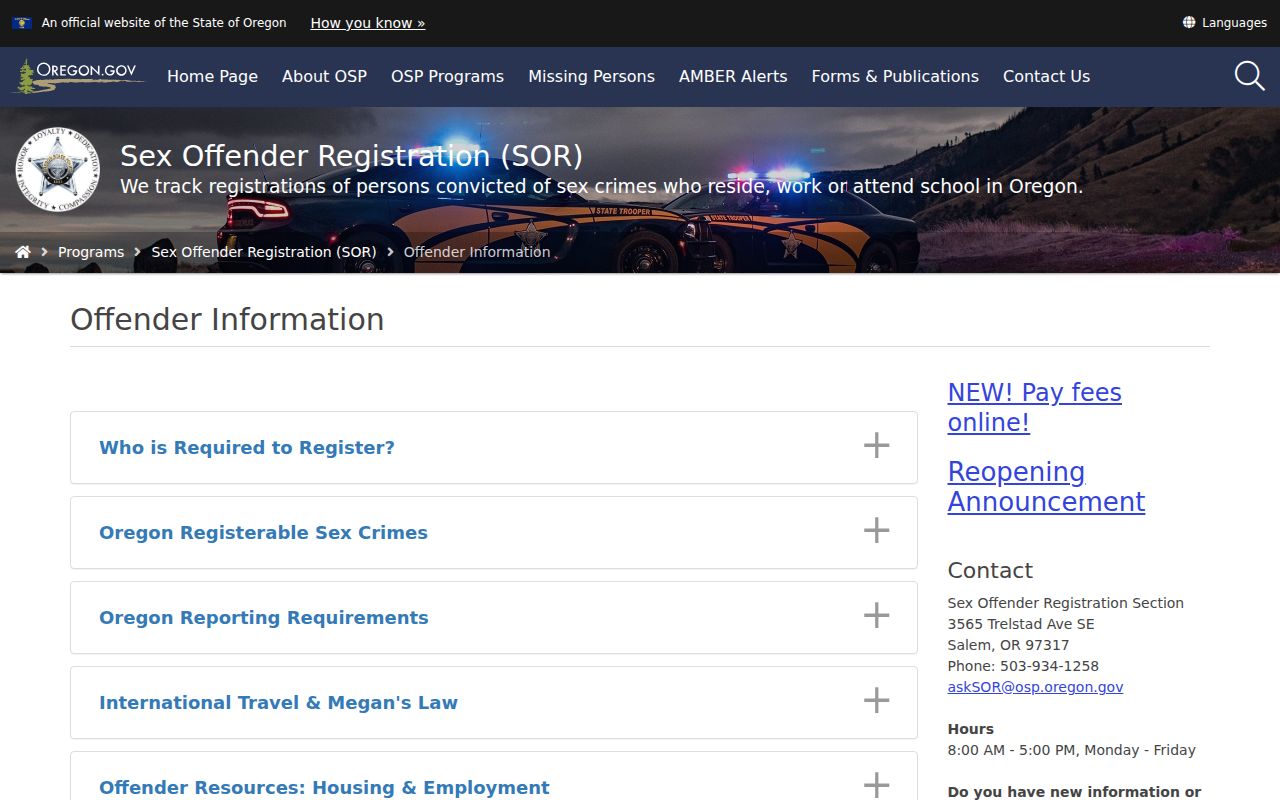
Those rules define the duties behind a Grant County result and explain why the map is not a list of every person who reports.
Oregon Sex Offender Registry Searches
The official portal is free. Gather a correct spelling or a precise location before starting. For an address query, use the location the interface recognizes rather than guessing at a radius. The research review did not establish fixed radius choices, so no distance setting should be assumed.
- Open Oregon's registry and read the conditions placed on public use.
- Enter a name, or choose location fields such as city, ZIP, and Grant County.
- Switch between the list and map views, then compare details carefully to avoid a false match.
- Open the public profile and check the offense, description, location, classification, and reporting details shown.
| Field or control | Type | Required | Use |
|---|---|---|---|
| Name | Text | No | Search a known name; profiles may show aliases. |
| Address or location | Text/map | No | Run a geographic search where enabled. |
| City | Text/filter | No | Enter a Grant County city. |
| ZIP | Text/filter | No | Use a five-digit ZIP. |
| County | Dropdown | No | Select Grant. |
| Map/list | Display control | No | Change the result view. |
Note: Recheck the live portal before relying on a saved Grant County search because addresses and public status can change.
Two Grant County Registration Counters
Grant County residents have a local starting point and a state program contact. The Grant County Sheriff's Office is at 205 S. Humbolt Street in Canyon City and can be reached at 541-575-1131. Call first to confirm the correct registration contact, appointment need, and counter availability. OSP's Sex Offender Registration Section is at 3565 Trelstad Avenue SE in Salem. Its program line is 503-934-1258, its email is askSOR@osp.oregon.gov, and published weekday hours are 8:00 a.m. to 5:00 p.m.
Grant County Sheriff
205 S. Humbolt Street
Canyon City, OR 97820
541-575-1131
Call before travel.
OSP Registration Section
3565 Trelstad Avenue SE
Salem, Oregon
503-934-1258
Weekdays, 8:00 a.m.-5:00 p.m.
The OSP sex offender program hub collects the state resources used by both the public and reporting agencies.
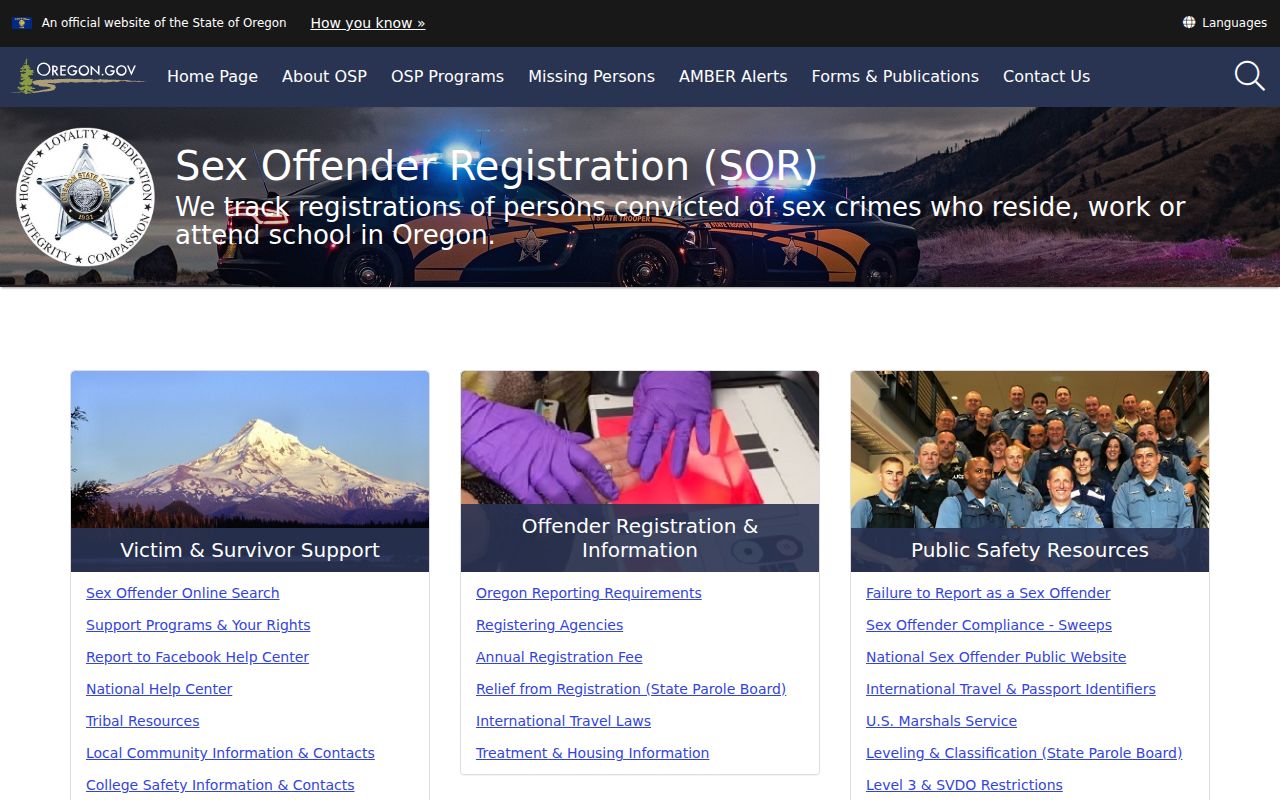
That program page is the best state-level fallback when a Grant County registry question goes beyond a public search result.
Grant County Registry Profiles
A public profile joins identity clues, legal history, and current registration data. Use several fields before deciding that a result belongs to the person sought. Names can be shared, aliases may differ, and physical details can change. Public display remains limited to what Oregon law authorizes.
| Name and aliases | Public identity names tied to the registry entry. |
|---|---|
| Photo and description | Photograph, sex, race, age or birth details, height, weight, hair, eyes, and permitted marks or tattoos. |
| Location | Address or location information at the level Oregon permits for public release. |
| Offense | Description or statute, conviction place and date, and victim-age category when authorized. |
| Risk level | Oregon classification and any designation released to the public. |
| Status details | Registration or compliance information and the responsible reporting agency when public. |
| Other information | Vehicle, school, or work data only when Oregon rules allow disclosure. |
Note: A Grant County public profile is an awareness record, not the complete OSP registration file or a full criminal history.
Grant County and National Searches
An Oregon search is strongest for current Oregon disclosure. A person may have lived, worked, or studied in another state, and each jurisdiction controls its own public fields. The Dru Sjodin National Sex Offender Public Website is the official federal gateway that searches participating state, territorial, and tribal registries. Use it as a second layer, not as a replacement for the Oregon portal.
Search Grant County first when the location is known. Then try NSOPW for a broader history or a move across state lines. A national result still needs to be read through the originating jurisdiction's rules, because terms, risk labels, and public disclosure differ.
The national portal provides the official cross-state source for that second pass.
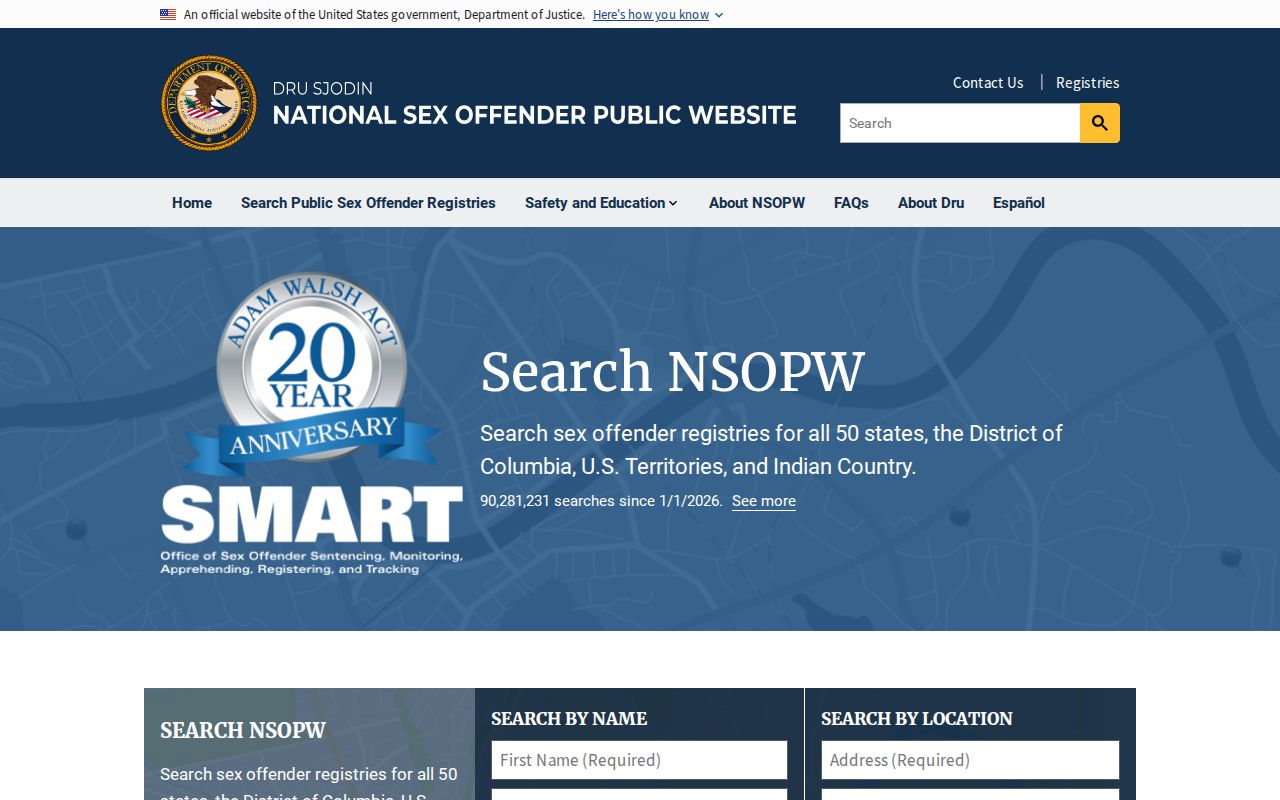
For a person connected only to Oregon, the Grant County and state filters usually give the more direct local picture.
Registration Levels and Duties in Oregon
Oregon uses risk levels for public disclosure and notification. They are not the federal shorthand of fixed 15-year, 25-year, and lifetime tiers. Reporting duration and possible relief depend on the offense, conviction date, assessed risk, and the process in ORS Chapter 163A. A level describes assessed risk and public treatment; it should not be converted into a federal duration without checking Oregon law.
| Oregon classification | Public treatment | Duration or relief |
|---|---|---|
| Level 1 | Lowest assessed risk; broad web disclosure is limited. | Reporting continues unless statutory relief is granted. |
| Level 2 | Moderate assessed risk; disclosure is broader where authorized. | Do not infer a federal Tier II duration. |
| Level 3 | Highest assessed risk; broad notification and search visibility. | Continuing duties and relief depend on ORS 163A. |
| Sexually Violent Dangerous Offender | Separate heightened designation and notification. | Statute and Parole Board processes control. |
The official ORS Chapter 163A is the source for classification, public disclosure, reporting, and relief. The statute should be checked in its current form before acting on an older profile or summary.
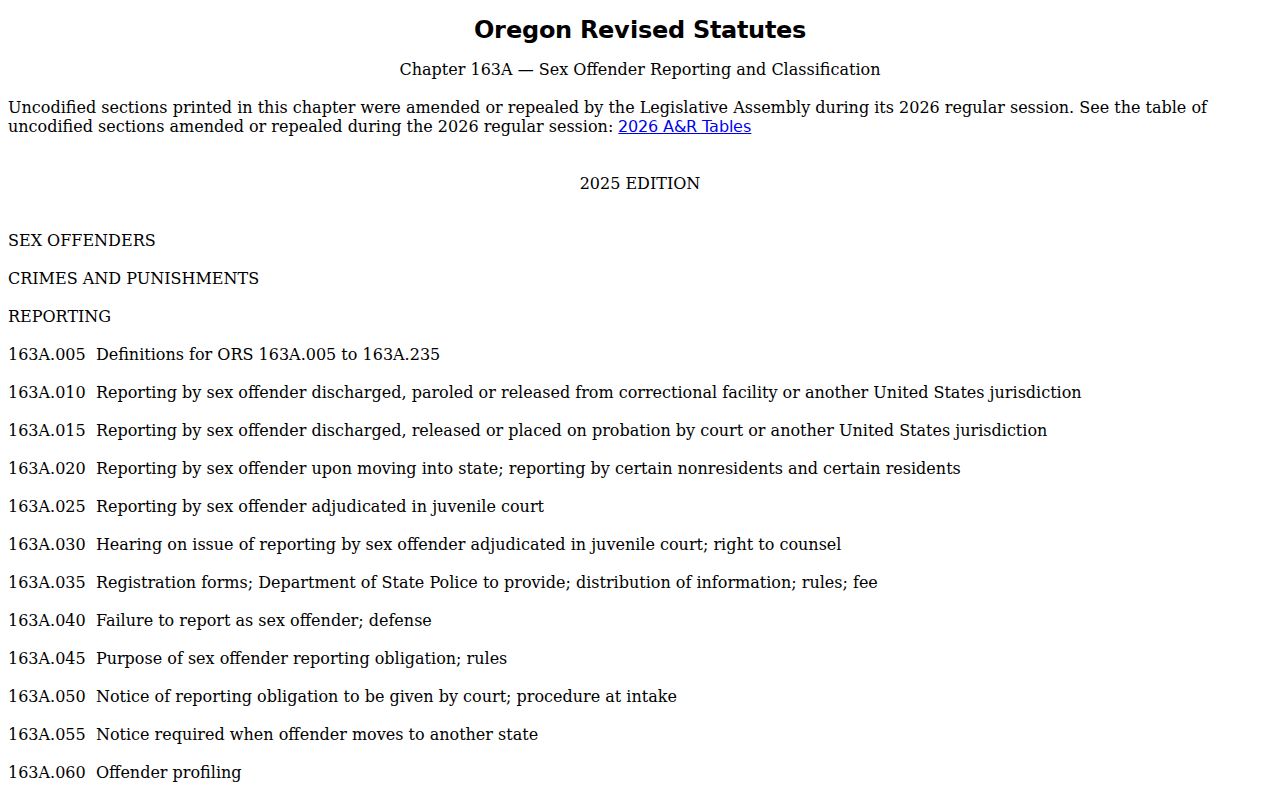
Its structure explains why a Grant County risk level does not supply a simple universal end date.
Report Grant County Noncompliance
When a current registry detail appears wrong, first distinguish a portal limit from a safety issue. A missing address or absent public profile may reflect Oregon's disclosure rules. Do not confront the person. Save the public details needed to explain the concern, such as the profile name, the field in question, and the date viewed.
Contact the Grant County Sheriff's Office at 541-575-1131 for a local concern. OSP's Registration Section can answer state program questions at 503-934-1258 or askSOR@osp.oregon.gov. Use 911 only for an emergency or immediate danger. Law enforcement can check nonpublic information and decide whether a report needs investigation.
Grant County Registry Email Alerts
The Oregon portal offers subscription choices tied to an offender or an address. This can help a Grant County household track a public record after the first search instead of relying on a saved result. Choose the alert that matches the safety need, provide a working email address, and keep the portal's confirmation or unsubscribe message.
An alert reports a change made available through the system. It does not certify that every reporting event is complete, nor does it replace an emergency call. Return to the live profile to read the new field in context. Contact the Grant County Sheriff when the notice points to a possible local compliance problem that the public record cannot answer.
Using Registry Information Lawfully
Registry information supports personal, family, and community safety. It can help a household understand a public notice, check an unfamiliar address, or find the right agency for a concern. Publication does not authorize threats, public shaming, trespass, or vigilante action. It also does not turn an old screen capture into proof of a person's current location or status.
Oregon Public Records Law does not override the specific limits in ORS Chapter 163A. Use the current official portal, keep the risk-level limits in mind, and send compliance concerns to the Grant County Sheriff or OSP. Public awareness works best when the information is read with care and acted on through lawful channels.
Misuse Is Prohibited: Harassing, threatening, or intimidating a registrant or household with registry information may be a crime. ORS Chapter 163A limits lawful disclosure and use.